

Amazon Japan pays ¥1,300 to ¥1,400 per hour for packing work at its delivery stations in Tokyo. Yamato and Sagawa start lower, often around ¥1,050 to ¥1,250 depending on region.
The real split between these three companies is language dependency, and it decides everything from your onboarding speed to whether you survive the probation period.



This article is for foreign workers already in Japan on a valid visa, comparing Amazon, Yamato, and Sagawa packing roles and trying to figure out which one fits their situation best.
How Much Do Amazon, Yamato, and Sagawa Packing Jobs Pay in 2026?
Amazon Japan packing jobs pay between ¥1,100 and ¥1,400 per hour depending on location and shift, based on current listings on Guidable and YOLO Japan as of September 2026.
Night shifts and dispatch agency placements can push that to ¥1,700 or higher in the Kanto region.
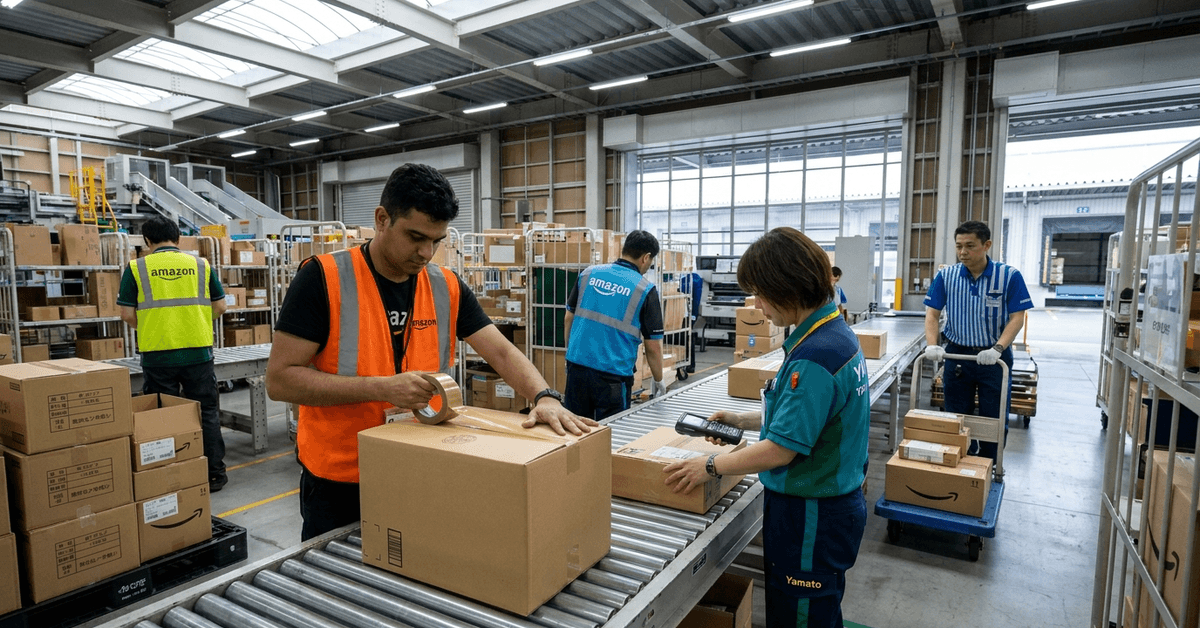
Yamato Transport sorting and packing roles list between ¥1,050 and ¥1,500 per hour on Indeed Japan and Stanby. The ¥1,500 figure shows up mostly for early-morning shifts (5:00 to 8:00 AM) where the deep-night premium kicks in.
Sagawa Express sits in a similar band. Part-time sorting and packing positions in Tokyo post at ¥1,300 to ¥1,400, according to Sagawa's own job portal. A 2026 breakdown on Dora-Dora puts Sagawa's part-time hourly range at ¥1,100 to ¥1,350 nationally.
The Overtime Factor at Sagawa and Yamato
Sagawa and Yamato both lean harder on overtime than Amazon does. Sagawa's full-time part-timers who hit overtime thresholds get the standard 25% wage premium mandated under Japan's Labor Standards Act.
Amazon structures shifts to avoid overtime almost entirely, rotating workers through fixed blocks.
I think Sagawa's overtime structure may earn you more monthly income than Amazon's higher base rate if you're willing to take early-morning or late-evening slots, because those ¥1,300/hour shifts with consistent 25% deep-night premiums after 22:00 add up faster than Amazon's flat ¥1,400 daytime rate with strict shift caps.
Bonuses Nobody Mentions
Sagawa offers twice-yearly bonuses (賞与) to part-time staff who work full-time hours. Yamato has a step-up wage system (ステップアップ時給) where your hourly rate increases after a set period.
Amazon tends to offer seasonal bonuses and one-time incentives during peak periods like Prime Day or year-end shipping surges.
Do You Need to Speak Japanese for Packing Jobs at These Companies?
Amazon Japan operates its fulfillment centers and delivery stations with bilingual instructions. Job listings on YOLO Japan specify that workers need to understand safety rules in Japanese, but handheld devices display tasks in both Japanese and English.
The hiring pipeline accepts applications in English.
Yamato is different. Face-to-face communication is the default at Yamato depots. Supervisors give verbal instructions. Labels, manifests, and route coordination all happen in Japanese. Listings rarely mention English support.
Sagawa falls closer to Yamato's model. Application forms on Sagawa's recruitment portal are primarily in Japanese. Interviews stress adaptability, and the day-to-day language is Japanese.
What "Daily Conversation Level" Means on a Job Listing
Amazon listings for foreign workers typically state 「日常会話レベル」 (daily conversation level) as the Japanese requirement.
This means you can follow simple spoken directions and read basic kanji on safety signs. You do not need N2 or formal business Japanese for most packing roles.
Yamato and Sagawa postings sometimes specify the same phrase, but the practical bar is higher because you're interacting with drivers and team leads constantly rather than following screen prompts.
Which Visa Types Qualify for Packing Work in Japan?
Amazon Japan's Guidable listings explicitly name eight eligible visa categories:
- Permanent Resident,
- Spouse of Japanese National,
- Spouse of Permanent Resident,
- Long-term Resident,
- Designated Activities (Working Holiday),
- Student, Dependent, and
- Japanese National.
Student visa holders face the 28-hour weekly work limit under Japan's Immigration Control Act. Amazon accommodates this with part-time blocks under 32 hours per week.
Several September 2026 listings on YOLO Japan specifically label these as 「32時間以内」 positions.
Yamato and Sagawa do not publish visa category lists as openly. Hiring tends to happen through local branch applications where visa status is verified individually.
Amazon vs Yamato vs Sagawa: Shift Structure Compared
The shift systems at these three companies follow completely different logic.
Amazon runs fixed shift blocks that you select when you're hired. Day, night, and part-time options are standard across most fulfillment centers. Switching shifts requires coordination with HR, and it can take weeks.
Yamato sorting roles cluster around morning and early afternoon. The 5:00 AM to 8:00 AM slot pays the highest hourly rate. Most Yamato packing roles are 3 to 5 hours, which makes them popular as side jobs (副業) rather than primary income sources.
Sagawa's shifts are the least predictable. Weekly schedules can change, and you may be asked to cover early mornings or late evenings on short notice.
| Feature | Amazon | Yamato | Sagawa |
|---|---|---|---|
| Hourly Pay (2026) | ¥1,100 to ¥1,400 | ¥1,050 to ¥1,500 | ¥1,100 to ¥1,400 |
| Primary Language | Japanese/English | Japanese | Japanese |
| Shift Type | Fixed blocks | Mostly morning | Variable |
| Overtime Culture | Minimal | Moderate | Heavy |
| Bonus for Part-Timers | Seasonal | Step-up wage | Twice-yearly 賞与 |
Sagawa's variable scheduling may suit workers who want maximum hours, while Amazon's rigid blocks work better for anyone juggling school or a second job.
The Application Process at Each Company
Applying to Amazon Japan happens entirely online. The digital pipeline includes an online assessment covering safety protocols and basic problem-solving. Interviews are brief and sometimes virtual. The whole process can wrap up in under two weeks.
Yamato's application starts on their recruitment page but shifts to an in-person interview quickly. Candidates describe the process as personal. You'll get a chance to ask about team atmosphere and daily tasks directly.
Sagawa accepts both online and walk-in applications at local branches. Expect a simple aptitude test and a background check. The interview focuses on physical readiness and schedule flexibility.
Things that help across all three applications:
- A resume mentioning any previous warehouse, factory, or logistics experience
- Proof of your visa status and residence card (在留カード)
- Willingness to commit to a minimum number of weekly shifts
- Basic safety footwear, which some companies supply and others require you to bring
What Packing Work Looks Like Day to Day
Amazon packing staff use handheld scanners to pick items, verify orders, and process returns. The workflow is screen-driven. Human interaction is minimal during the shift itself.
Yamato packers prepare parcels for local delivery routes, check address labels, and coordinate handoffs with drivers. The job has a social layer that Amazon's warehouse roles do not.
Sagawa's packing teams handle larger, heavier shipments. Industrial and business logistics make up a bigger share of Sagawa's volume than consumer e-commerce parcels.
Physical demands are real at all three. Repeated lifting, hours of standing, and fast movement through warehouse floors are standard. Peak seasons around year-end (October through January) are the most intense.
Tax and Insurance for Part-Time Packing Workers
Part-time packing employees in Japan are enrolled in national health insurance (国民健康保険) and pension schemes (国民年金) when they meet minimum hour and income thresholds. Taxes are deducted from each paycheck automatically.
Foreign workers on student or dependent visas should track pay slips carefully. Exceeding the 28-hour work limit or the annual income threshold of ¥1,030,000 can trigger tax complications and, in the worst case, visa renewal issues.
Questions People Ask About Packing Jobs in Japan
These are questions that come up often for foreign workers comparing Amazon, Yamato, and Sagawa.
- Q: Can I work at Amazon Japan if I only speak English?
Amazon's fulfillment centers use bilingual device interfaces, so English-only workers can manage basic packing tasks. But safety briefings and onboarding sessions include Japanese, and you'll need enough comprehension to follow emergency instructions. Applying through Guidable or YOLO Japan gives you English-language job listings with clearer expectations. - Q: Is Sagawa harder physically than Amazon or Yamato?
Sagawa handles more business and industrial freight, so the average parcel weight tends to be higher. Amazon's consumer packages are lighter on average but the pace is faster, especially during Prime Day and holiday surges. Yamato falls in between, with mostly standard residential parcels. - Q: Do any of these companies sponsor work visas for packing roles?
None of the three commonly sponsor new work visas specifically for packing or sorting roles. They hire workers who already hold a valid visa that permits employment. Some dispatch agencies partnering with Amazon do assist with visa paperwork for workers already in Japan. - Q: What happens after a seasonal packing contract ends?
Amazon, Yamato, and Sagawa all use seasonal and contract-based hiring for peak periods (roughly October through January). Contract renewal depends on attendance and performance. Amazon's conversion rate from seasonal to regular part-time varies by center but is common enough that many workers treat the seasonal contract as a trial period. - Q: Which company is best for a student visa holder working 28 hours a week?
Amazon has the clearest part-time infrastructure for 28-hour workers, with shifts explicitly designed under the 32-hour weekly cap. Yamato's short morning shifts (3 to 5 hours) also fit well. Sagawa's variable scheduling makes it harder to guarantee you'll stay within your weekly limit.
Conclusion
Every logistics company in Japan is short on warehouse labor, and that shortage is growing each year. The question for foreign workers comparing Amazon, Yamato, and Sagawa is not which company will hire you.
It is which one matches your visa, your language ability, and your schedule. Amazon gives you the smoothest English-friendly application and the most predictable shifts.
Yamato offers a slower pace and a tighter team environment. Sagawa rewards workers who can handle variable hours and heavier freight. Pick the one that fits your constraints first, then worry about the pay gap second.