

Advance your hospitality career inside one of the world’s most visitor-friendly nations by mastering the hotel job market across Japan’s vibrant cities and resort areas.
This guide clearly identifies where opportunities exist, which skills are essential, and the salary ranges you can realistically expect when pursuing positions ranging from entry-level front desk roles to executive management posts.



Why Japan’s Hospitality Sector Keeps Hiring?
Increasing inbound tourism has continually expanded Japan’s hotel landscape, while domestic travel campaigns fuel demand even during economic slowdowns.
Rapid pre-pandemic growth demonstrated the sector’s resilience, and industry analysts project visitor numbers will surpass 2019’s peak very soon.
Sustained infrastructure investment, generous government promotion, and Japan’s global cultural appeal combine to keep hotels recruiting multilingual staff year-round, making the country a reliable employment hub for hospitality professionals worldwide.
Main Categories of Hotels Accepting Global Talent
Choosing the right property type influences daily duties, required language levels, and long-term advancement potential. The overviews below help you target venues that actively welcome non-Japanese staff.
Comfort and Western-Style Hotels
International chains such as Marriott or Hilton replicate Western service standards, maintain large rooms, and offer extensive amenities.
These properties regularly advertise worldwide because their guests expect fluent English and global service benchmarks, leading management to recruit staff who can navigate diverse cultural expectations.
Business Hotels
Mid-priced accommodations near train stations focus on efficiency for working travelers.
Limited services mean leaner staff counts, yet front desk and night audit shifts often suit bilingual candidates who can handle quick check-ins, room assignment software, and telephone inquiries without heavy concierge duties.
Ryokan and Minshuku
Traditional inns immerse guests in tatami-floor rooms and regional cuisine. Heritage themes attract domestic tourists, so hiring favors those with Japanese cultural knowledge.
Foreigners occasionally secure roles after advanced language study or culinary training focused on kaiseki dining.
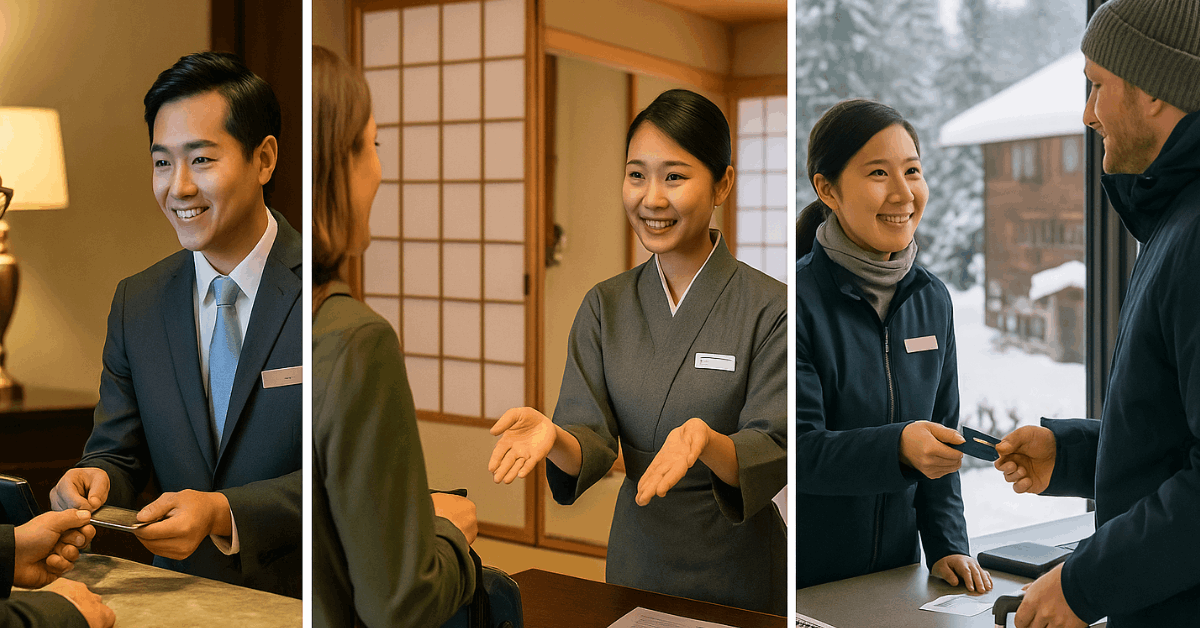
Luxury Hotels
Five-star brands demand impeccable service across reception, food and beverage, and guest relations.
Multinational client bases require multiple languages, refined etiquette, and strong upselling skills, creating premium opportunities for experienced professionals who can deliver polished interactions consistently.
Ski Resorts
Seasonal hotels in Niseko, Hakuba, and other alpine zones recruit internationally for winter and summer peaks.
Roles span lift-ticket sales, chalet housekeeping, and après-ski bar service. Snow-sport familiarity and conversational Japanese skills enhance candidacy, yet many resorts still hire staff who are purely English-speaking, due to the high proportion of foreign visitors.
Shukubo
Temple lodgings provide serene stays within Buddhist precincts. Monastic routines and vegetarian cuisine define daily operations, and staffing mainly involves Japanese practitioners.
Applicants usually need advanced language skills and respect for religious protocol.
Love Hotels
Privacy-centric properties rent rooms by the hour and enforce discreet protocols.
Hiring leans toward night receptionists fluent in Japanese, although technology-driven self-check systems can lower language thresholds for certain cleaning or maintenance shifts.
Capsule Hotels
Sleep pods near urban stations serve commuters and budget tourists. Compact layouts require meticulous housekeeping and efficient check-in procedures.
English signage and automated kiosks create openings for global job seekers who handle high guest turnover with composure.
Essential Hotel Roles and Career Paths
A clear understanding of core positions enables you to match personal strengths with employer needs, improving application success.
Management Roles:
- General Hotel Manager – Oversees financial performance, brand standards, and departmental coordination while ensuring guest satisfaction drives repeat bookings.
- Vice Director – Supports the general manager in four-star and five-star properties, resolves VIP issues, and harmonizes staffing across divisions.
Reception and Front Office:
- Receptionist / Front Office Clerk – Welcomes guests, verifies reservations, and provides local guidance, demanding excellent interpersonal and language abilities.
- Back Office Clerk – Handles administrative tasks such as payroll support, supplier invoicing, and HR documentation without direct guest interaction.
- Concierge – Manages first impressions, arranges transport, secures restaurant seats, and curates experiences for high-spending guests.
- Bellhop – Transports luggage, explains room features, and offers quick local tips while maintaining physical stamina and upbeat demeanor.
Housekeeping:
- Maid / Room Attendant – Cleans, sanitizes, and resets guest rooms to strict timelines and brand hygiene standards.
- Laundry Officer – Operates washers, dryers, and presses to guarantee linens meet softness, scent, and appearance criteria every shift.
Food and Beverage:
- Food & Beverage Manager – Controls cost percentages, supervises outlet supervisors, and safeguards health code compliance across kitchens and bars.
- Executive Chef – Designs menus, sources premium ingredients, and mentors brigade members, upholding culinary excellence that shapes property reputation.
- Waiter / Waitress – Delivers plates promptly, explains allergens, and manages last-minute substitutions with professionalism.
- Sommelier – Curates wine lists, assists pairings, and organizes cellar inventory, demanding refined palate and formal certification.
- Barman – Crafts cocktails, maintains bar stock, and fosters guest rapport during peak evening hours.
Skills That Increase Your Hiring Probability
Brief mastery of the competencies below distinguishes applicants during both human and AI screening.
- Computer Literacy – Property-management systems, POS terminals, and procurement software require confident keyboard navigation.
- Japanese Language Proficiency – Conversational ability (JLPT N3 or better) accelerates onboarding and broadens departmental transfer options.
- Fluent English – Global guests expect seamless communication; additional languages such as Mandarin or Spanish boost frontline value.
- Communication Acumen – Active listening and clear articulation increase guest satisfaction scores and reduce complaint escalation.
- Team Coordination – Collaborative mind-set ensures housekeeping, kitchen, and front desk teams sync schedules to meet occupancy surges.
- Time Management – Consistently meeting check-in targets, cleaning deadlines, and meal periods keeps property operations flowing smoothly.
- Problem-Solving Ability – Rapidly resolving overbooking issues or ingredient shortages preserves reputation and revenue.

Typical Salary Bands Across Experience Levels
Financial expectations vary by position, city, and years on the job, yet the figures below provide realistic benchmarks.
| Role | Early Career (-2 yrs) | Mid Career (5 yrs) | Seasoned (10 yrs) | Late Career (15+ yrs) |
| Hotel General Manager | ¥6 000 000 | ¥8 000 000 | ¥11-12 000 000 | ¥16-17 000 000 |
| Receptionist | ¥1-2 000 000 | ¥2.3 000 000 | ¥3 000 000 | ¥4.3 000 000 |
| Maid / Housekeeper | ¥1.6 000 000 | ¥2.2-2.8 000 000 | ¥3 000 000 | ¥3.4 000 000 |
| Executive Chef | ¥2-3 000 000 | ¥3.4 000 000 | ¥4-5 000 000 | ¥6-7 000 000 |
| Barman | ¥1.4 000 000 | ¥2 000 000 | ¥2.7 000 000 | ¥4 000 000 |
Reliable Channels for Locating Vacancies
Successful searches combine global job boards, direct company portals, and specialist recruiters.
- International Job Sites: LinkedIn, Indeed, and Glassdoor present numerous listings written in English.
- Japan-Focused Platforms: GaijinPot, JobsInJapan, Daijob target foreign professionals and highlight visa-sponsoring employers.
- Corporate Career Pages: Marriott, Hyatt, and Hilton regularly update “Careers” sections with both part-time and full-time roles.
- Seasonal Resort Boards: Niseko United and Okinawa beachfront resorts display winter or summer openings months ahead.
- Recruitment Agencies: Robert Walters Japan, Michael Page, and Optia Partners specialize in management placements and expedite interview scheduling for qualified leads.
Education and Training Routes Valued by Recruiters
Strategic learning choices signal long-term commitment and elevate salary offers.
Hotel Management Programs
Bachelor’s degrees in hospitality or business equip candidates with revenue analysis and HR strategies. The Japan Hotel School in Tokyo provides industry-specific diplomas, although classes require strong Japanese competency.
Culinary Academies
Aspiring chefs gain knife skills, plating aesthetics, and food safety certification through institutions such as Tokyo Sushi Academy and Le Cordon Bleu. Graduates often leapfrog into junior sous-chef roles.
Language Schools
Affordable programs like Japan Switch help working professionals upgrade Japanese fluency without locking into costly long-term contracts. Weekly progress directly improves guest interaction confidence.
Sake and Wine Certifications
Sake School Osaka and the Sake Sommelier Academy teach aroma profiling, brewing processes, and service etiquette, unlocking specialist positions inside fine-dining outlets.
Digital Tools That Sharpen Your Application
Modern hiring platforms accelerate screening, so adopting them demonstrates tech readiness.
- Video Interview Recording: JobsInJapan enables you to record answers after previewing the questions, allowing employers to assess personality fit quickly.
- AI Performance Feedback: Automated analysis provides objective language fluency scores and suggests delivery improvements, allowing you to refine your approach before live interviews.
- Résumé Builder: Professional templates transform career milestones into an engaging story, prominently displaying certifications and language skills.
- Cover Letter Assistant: Machine-learning algorithms align your competencies with vacancy requirements, producing concise letters that beat generic copy-and-paste submissions.
Conclusion
Securing a hotel role in Japan requires thorough research, targeted skill development, and strategic utilization of global job networks. Apply the insights above, leverage digital tools that streamline your candidacy, and maintain a proactive mindset.
Your commitment, combined with hospitality’s ongoing expansion across Japan, positions you to turn global ambition into a rewarding career serving guests from every corner of the world.