

For anyone wondering about gas station jobs in Japan , there’s more to the position than just filling tanks. This type of work appeals to people seeking steady hours, routine duties, and a clear workplace environment.
Given the wide presence of brands like Eneos or Cosmo Oil , the sector offers a range of positions, even for those with little previous experience—though a comfortable grasp of basic Japanese really helps.



If you’re aiming for a stable job that offers experience in customer service, or you just want a reliable income stream in Japan, exploring this field can make sense.
Why Consider Gas Station Jobs in Japan?
Sometimes it’s hard to find reliable roles in a new country.
For those interested in work that allows for a structured day and limited desk time, gas station employment stands out. Hours can be flexible—although this depends a lot on location and company.
The work itself, while it might seem routine, includes a surprising range of responsibilities depending on the team size and the services offered.
Steady Demand Across Urban and Rural Areas
Japan depends on personal vehicles and delivery logistics, so the need for fuel stations remains constant.
Eneos and Cosmo Oil operate stations in both busy city centers and more rural districts—meaning the jobs aren’t just clustered in expensive, urban neighborhoods.
That said, Tokyo and Osaka do see more competition for shifts, but for those open to other locations, opportunities can be found.
Suitable for a Wide Range of Applicants
These positions are popular with both students and those seeking supplemental income.
Some stations can accommodate part-time workers or those who want to combine shifts with school or another job. However, the ability to communicate politely in Japanese is usually necessary, even for basic tasks.
Major Gas Station Chains: Eneos and Cosmo Oil
Two of the biggest operators— Eneos and Cosmo Oil —are household names in Japan. They provide consistent standards, training, and sometimes even premium uniformed work environments.
The job’s day-to-day elements might vary slightly depending on which company you’re with, but the core experience often feels familiar across different sites.
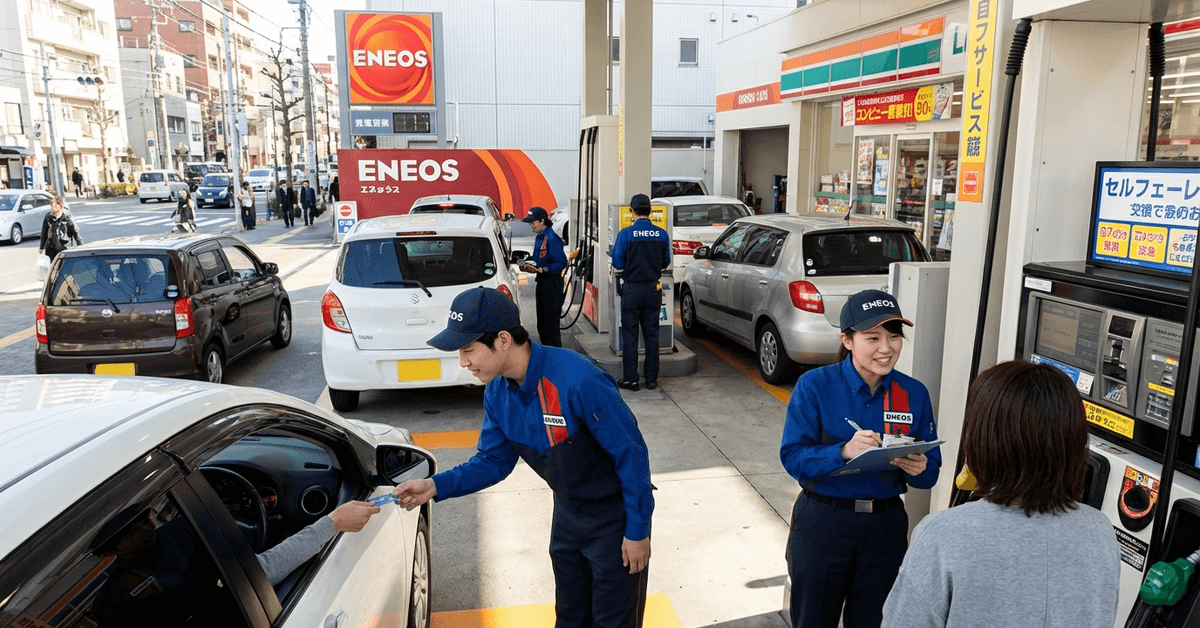
Eneos: Japan’s Largest Petroleum Brand
With more than 10,000 outlets nationwide, Eneos locations range from full-service stations (where staff assist customers with pumping and window cleaning) to self-service types, which usually employ fewer people.
Full-service sites may require more customer interaction, while self-service setups might involve more cleaning, machine monitoring, and sales within the mini-mart.
Cosmo Oil: Consistent Training and Customer Service Focus
Cosmo Oil may not be as large as Eneos, but it’s still a significant employer in this market, known for strict adherence to safety standards and clear roles for staff.
Applicants here can expect thorough training in equipment usage and workplace safety, making it a relatively safe introduction to the industry for new hires.
Typical Duties and Daily Life at a Japanese Gas Station
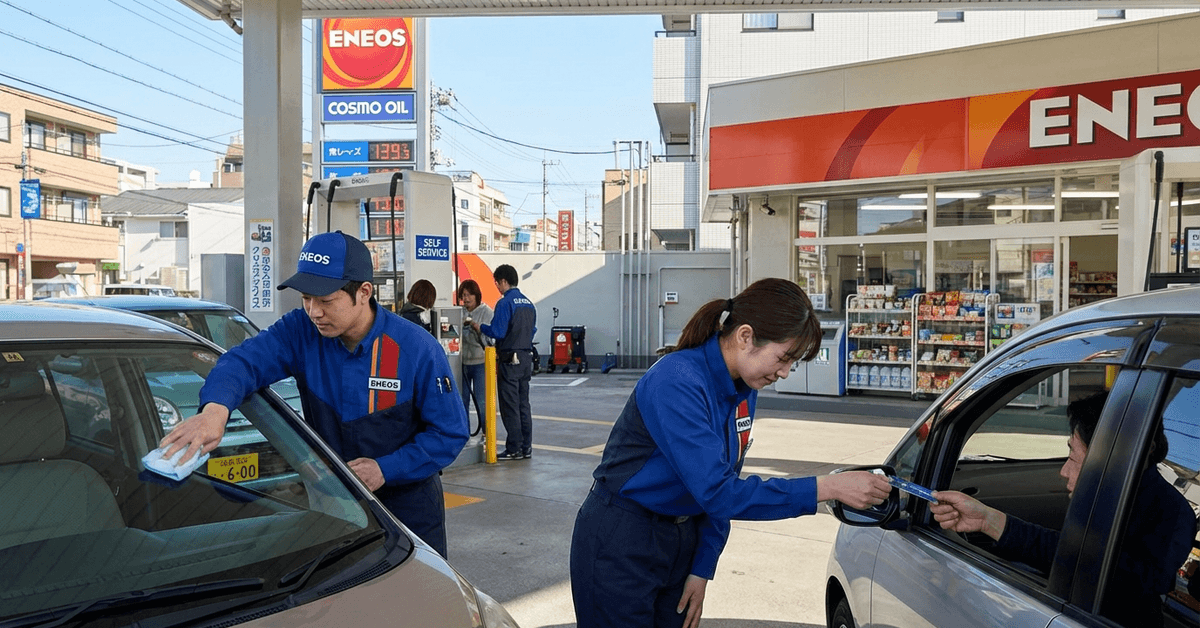
Most people imagine these roles as only about pumping gas, but the real workday can be quite varied. Employees handle routines that stretch far beyond fuel; in some stations, car cleaning and light maintenance are frequent parts of the day.
Common Responsibilities
- Greeting and assisting customers—politeness is a priority here
- Operating fuel pumps and offering full-service assistance when required
- Maintaining cleaning standards in station facilities and bathrooms
- Restocking shelves and selling convenience store items
- Light vehicle checks: confirming oil, coolant, and tire pressure when requested
- Following clear safety procedures for handling flammable substances
Shifts and Work Hours
Eneos and Cosmo Oil stations may operate long hours—some even 24/7. Shift times can fit morning people or night owls, depending on the location.
Weekend work is typical, and overtime is not rare, particularly at busy intersections or highway stops. Full-timers could expect schedules resembling traditional office shifts, but with weekend rotation included.
Qualifications Needed for Gas Station Employment in Japan
The beauty of this sector is its low entry barrier—though some paperwork and vetting remain. Here are the core requirements that show up across Eneos, Cosmo Oil, and similar employers:
- Basic conversational Japanese for customer interaction and safety updates
- Some roles (especially handling cash) require proof of residence or the appropriate work visa for foreigners
- No previous experience necessary for most entry roles; in-house training is a given
- Physical capability—a fair amount of standing, light lifting, and outdoor work are standard
Preferred Skills
- Attention to detail (fuel errors are serious business)
- Reliability with timekeeping
- Comfort in teamwork and taking simple directions
- Ability to adapt quickly to changing weather or customer flows
Potential Income and Benefits When Working at Japanese Gas Stations
Income really depends on location and experience. Major urban centers—Tokyo, Yokohama, and Osaka—sometimes offer slightly higher hourly wages, reflecting cost-of-living pressures.
Wages also jump for overnight shifts and holidays, making them worth considering for those who don’t mind irregular hours.
Average Hourly Wages
- Entry-level: typically ¥1,000–¥1,200
- Overtime and night shifts: can exceed ¥1,300–¥1,500 per hour
- Supervisory or long-term roles: sometimes see additional bonuses or incentives
Some companies provide subsidized meals or uniform cleaning allowances, and it’s rare but possible to see transportation support or paid breaks depending on the chain’s policies.
How to Apply: The Steps to Getting Hired
Applicants usually begin online—both Eneos and Cosmo Oil list openings on their official websites.
There are also Japanese part-time job sites and recruiting agencies specializing in service industry roles. Occasionally, stations even post hiring signs directly outside the shop.
The Application Process
- Search job listings on official company sites or reputable job boards
- Prepare a simple Japanese resume (rirekisho) with key details
- Submit online or bring directly to the station if applying in person
- Interview—usually a brief, polite conversation about schedule, physical ability, and attitudes to customer service
- In some cases, expect a trial day to demonstrate skills
Jobs tend to favor those who show up on time and approach work with genuine interest. Absence of experience isn’t a major obstacle; enthusiasm counts for more.
Key Challenges and Things to Consider
This work isn’t for everyone. There are hazards—handling fuel brings some risks, even with routine.
Workdays can be cold in winter, hot in summer. The pace swings from quiet lulls to sudden rushes, especially during holidays. Some workers mention mild frustration with customers in a hurry, or rainy days spent mostly outdoors.
Still, for those who appreciate structure and predictability, the atmosphere remains steady—sometimes almost meditative when things are quiet.
Language and Cultural Expectations
Japan values clear communication, politeness, and visible effort. Even basic errors in polite conversation (keigo) may be gently corrected, but it’s rare for employers to discourage foreign applicants who genuinely wish to learn.
Every mistake is treated as a chance to improve, provided you listen and adapt.
Legal and Tax Considerations for Foreign Workers
Anyone without Japanese citizenship requires a legitimate visa authorizing work in Japan.
Common options include student visas (with 28-hour-per-week limits), dependent visas, or designated activity permits. Keeping track of legal documentation is vital—not just for payroll, but also during government audits.
Payment and Working Hours Regulations
- Hourly wage and overtime must be paid according to local labor law
- Health insurance and pension enrollment depend on the site and the hours worked
- Annual tax is handled through the company payroll or direct declaration by the worker (kokumin-zei)
If in doubt, social support centers in each community often provide multilingual assistance for paperwork and tax filings. It’s a bit of a bureaucracy, but support is available if you know where to look.
Career Progression and Related Opportunities
Some may wonder about taking these jobs long-term or moving up. It’s not uncommon for steady performers to be offered supervisory roles or to cross-train as shift leaders.
Soft skills gained—like reliability, punctuality, and customer relations—are valued in other industries too.
Working in a friendly team can also help boost language abilities and awareness of workplace culture, which tends to help in all kinds of future employment in Japan.